
The modern kitchen, once a bastion of plastic convenience and resource-intensive materials, is undergoing a quiet revolution. Driven by a surge in environmental awareness and a desire for healthier living spaces, homeowners are seeking sustainable alternatives. At the forefront of this shift stands bamboo – a remarkable grass offering a compelling vision for the future of eco-friendly kitchens. Far more than just a trendy aesthetic, bamboo products represent a fundamental shift towards genuine sustainability, resource conservation, and a reduced environmental footprint.
Unmatched Renewability: The Speed of Grass
The core argument for bamboo lies in its astonishing growth rate. Unlike slow-growing hardwoods used for traditional cutting boards, utensils, or flooring (which can take decades or even centuries to mature), bamboo is technically a grass. Many commercially viable species reach harvestable maturity in just 3 to 5 years. Some varieties can grow over 3 feet (1 meter) in a single day under optimal conditions. This rapid regeneration makes bamboo an incredibly renewable resource. Replacing a bamboo cutting board or utensil set doesn’t mean depleting ancient forests; it means harvesting a crop that will regrow quickly and efficiently, minimizing pressure on vulnerable ecosystems.
Championing Carbon Sequestration and Soil Health
Bamboo isn’t just fast-growing; it’s a powerhouse for carbon capture. During its vigorous growth phase, bamboo absorbs significantly more carbon dioxide (CO2) per hectare than many tree species and releases 35% more oxygen. This makes bamboo plantations vital carbon sinks, actively combating climate change. Furthermore, bamboo’s extensive root system is exceptional at preventing soil erosion. These roots remain intact after harvesting (as bamboo regenerates from the rhizome), continuously stabilizing soil, improving water retention, and preventing landslides – contributing to long-term agricultural and environmental health.
Minimizing Resource Consumption: Less Water, No Pesticides
Compared to conventional crops like cotton (used for dish towels and aprons) or resource-intensive hardwoods, bamboo requires significantly fewer inputs:
Biodegradability: Closing the Loop
One of the most significant problems with traditional kitchenware, especially plastic, is its end-of-life. Plastic utensils, containers, and packaging can persist in landfills or oceans for centuries, breaking down into harmful microplastics. Bamboo, being a natural organic material, is biodegradable and compostable under the right conditions (industrial composting facilities are ideal for treated bamboo products). Even if discarded, untreated bamboo will break down far more quickly and safely than plastic, returning nutrients to the earth without leaving persistent toxic residues. This closes the loop on the product lifecycle.
Strength and Durability: Built to Last (Naturally)
Despite its lightweight feel, bamboo boasts impressive strength and durability. Its tensile strength rivals that of steel, and it’s harder than many hardwoods like maple or oak. This translates to kitchen products that are:
Durability is a key pillar of sustainability – products that last longer reduce the need for frequent replacements and the associated resource consumption and waste generation.
Natural Antibacterial Properties: A Healthier Kitchen
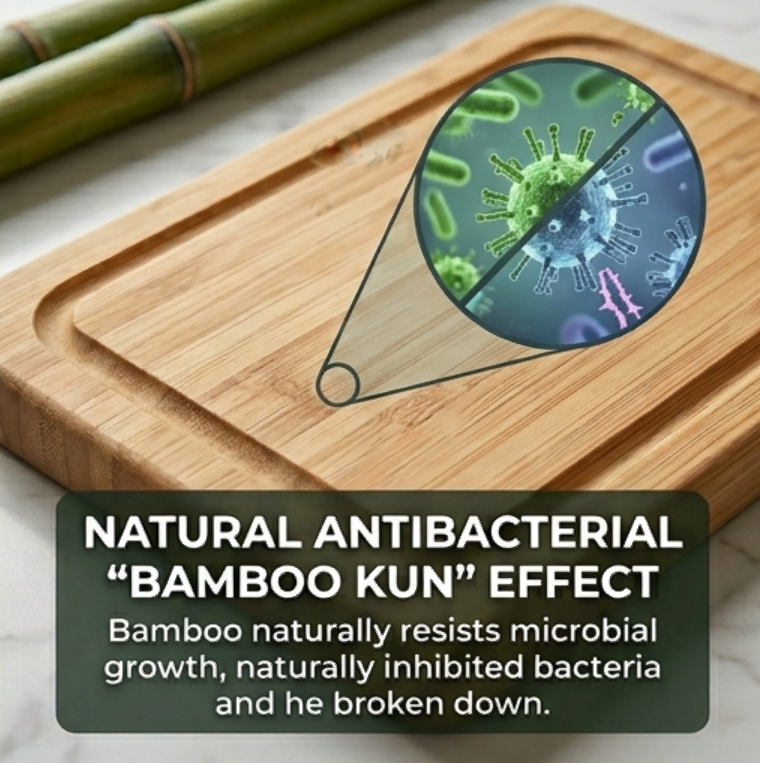
The “bamboo kun” present within the plant provides inherent resistance to bacteria and fungi. While not a substitute for proper cleaning, this natural property gives bamboo kitchen products like cutting boards, utensils, and countertops an edge in inhibiting microbial growth compared to plastic, which can develop deep scratches harboring bacteria, or some porous woods. This contributes to a more hygienic food preparation environment.
Versatility: Bamboo’s Kitchen Renaissance
The applications for bamboo in the kitchen are remarkably diverse, constantly expanding as innovation grows:
Aesthetic Appeal: Warmth Meets Modernity
Beyond its environmental credentials, bamboo brings a natural, warm, and minimalist aesthetic to the kitchen. Its light color and distinctive grain pattern complement various design styles, from Scandinavian simplicity to rustic charm and contemporary elegance. It adds an element of organic beauty that plastic or metal simply cannot replicate.
Addressing Considerations: Responsible Sourcing is Key
While bamboo holds immense promise, responsible sourcing is crucial for maximizing its benefits:
Conclusion: More Than a Trend, It’s the Future
Bamboo isn’t just another eco-friendly option; it represents a paradigm shift for the kitchen. Its unparalleled combination of rapid renewability, impressive carbon sequestration, minimal resource requirements, inherent strength, natural hygiene benefits, biodegradability, and stunning versatility makes it uniquely positioned to displace less sustainable materials.
As consumers increasingly demand products that align with their environmental values, and as technology improves processing and design, bamboo’s role in the kitchen will only expand. It offers a tangible solution to the problems of plastic pollution, deforestation, and resource depletion. By choosing bamboo for utensils, cutting boards, textiles, storage, and more, we actively participate in creating kitchens that are not only beautiful and functional but fundamentally kinder to the planet. Embracing bamboo is more than a design choice; it’s an investment in a genuinely sustainable and eco-friendly future for the heart of our homes. The kitchen of tomorrow is growing today – and it’s made of bamboo.
Post time: Apr-22-2026