
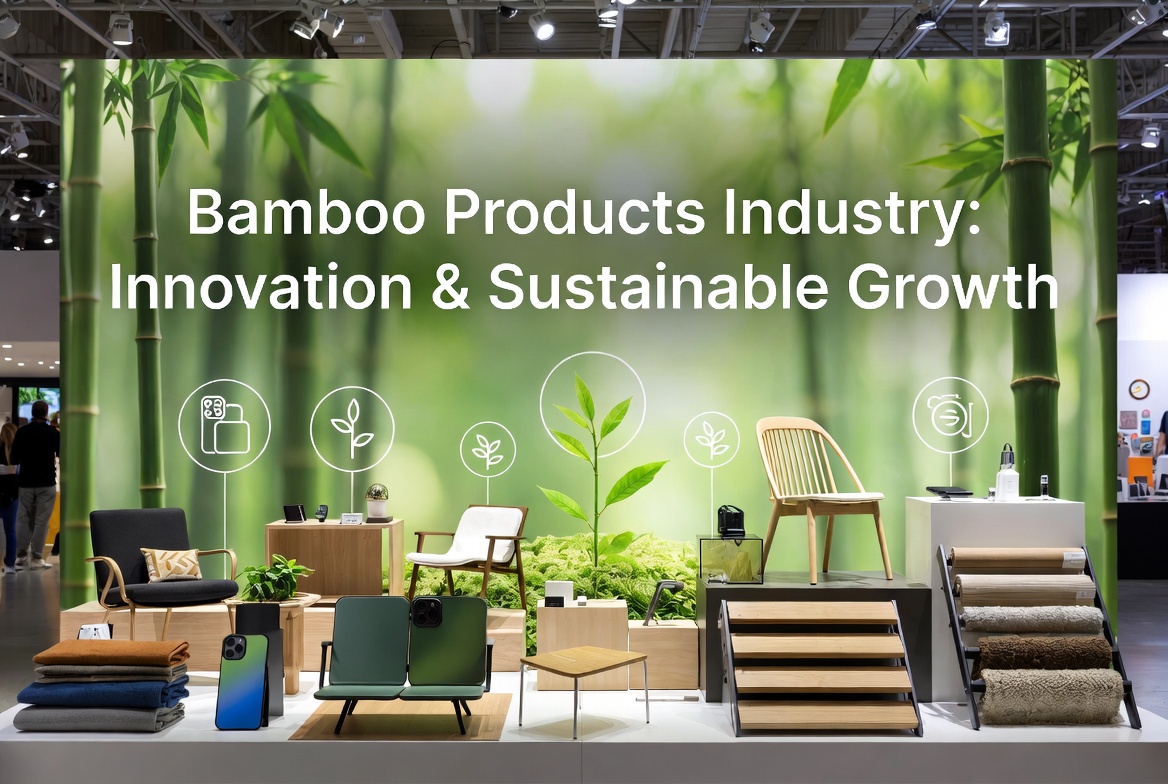
 With the concept of sustainable living firmly entrenched in people’s minds, the bamboo products industry is presented with unprecedented development opportunities. As a rapidly growing natural material with strong carbon sequestration capabilities, bamboo, owing to its eco-friendly characteristics and practical value, is rapidly expanding from traditional handicrafts to diversified and high-quality daily products.
Technological Innovation Drives Product Upgrades
In recent years, breakthroughs in deep bamboo processing technology have become the core driving force of the industry. Through high-temperature carbonization treatment, the anti-mold and moth-resistance properties of bamboo products are significantly enhanced. The maturity of bamboo fiber extraction technology has further given rise to high-end textiles such as bamboo fiber towels and underwear. In the construction sector, the compressive strength of heavy bamboo boards has reached the level of natural hardwood and is widely used in outdoor flooring and furniture manufacturing. Data indicates that in 2023, the global bamboo products market size exceeded $12 billion, with technology-driven products accounting for a 37% year-on-year increase.
Design Empowerment Activates Market Potential
The involvement of international design forces is reshaping the aesthetic essence of bamboo products. At the Milan Furniture Fair, the cross-over combination of bamboo, metal, and glass repeatedly won design awards. The Japanese brand offers a folding bamboo bike weighing only 9.8 kilograms, which balances practicality with urban aesthetics. Domestic companies are also accelerating their transformation, with the “bamboo + smart” becoming the new frontier. Tech products such as bamboo wireless chargers and bamboo-based phone cases sell over 10,000 units monthly on e-commerce platforms. Notably, Generation Z consumers are 53% more likely than traditional groups to purchase bamboo products, and design-driven factors have become the key to unlocking the youth market.
Green Supply Chain Builds Industrial Barriers
Industry competition has shifted from a single-product focus to a full-chain environmental protection approach. Leading companies have established a traceability system through bamboo forest FSC certification, with each raw bamboo stalk marked with harvesting coordinates and growth cycle. The bamboo industry park in Anji, Zhejiang, has achieved closed-loop production of “replacing plastic with bamboo,” where bamboo waste is converted into bamboo vinegar fertilizer through biological refinement, achieving a resource utilization rate of 92%. The EU’s latest draft includes bamboo products in the carbon tariff exemption list, and supply-chain-compliant companies are expected to seize the €3 billion export market opportunity.
Challenges Remain, Calls for Collaborative Breakthroughs
The industry still faces three major pain points: on the raw material side, insufficient intensive bamboo forest management leads to quality fluctuations; on the manufacturing side, the penetration rate of automation equipment is only 15%, restricting capacity growth; on the consumer side, the prices of bamboo products remain more than 30% higher than plastic alternatives. Breaking the deadlock requires joint efforts from multiple parties: government policies favor bamboo technology R&D, for example, Fujian provides a 20% R&D subsidy to bamboo fiber enterprises; industry associations promote the establishment of bamboo grading standards; companies are exploring the “bamboo leasing” model to reduce users’ trial costs.
As the goal of carbon neutrality approaches, bamboo products have transformed from cultural symbols into carriers of the green economy. In the next three years, the industry will focus on three main directions: material modification, intelligent production, and carbon sink trading. When every bamboo stalk carries ecological value, this “green revolution” will ultimately reshape our way of life.
Post time: Jun-03-2026