
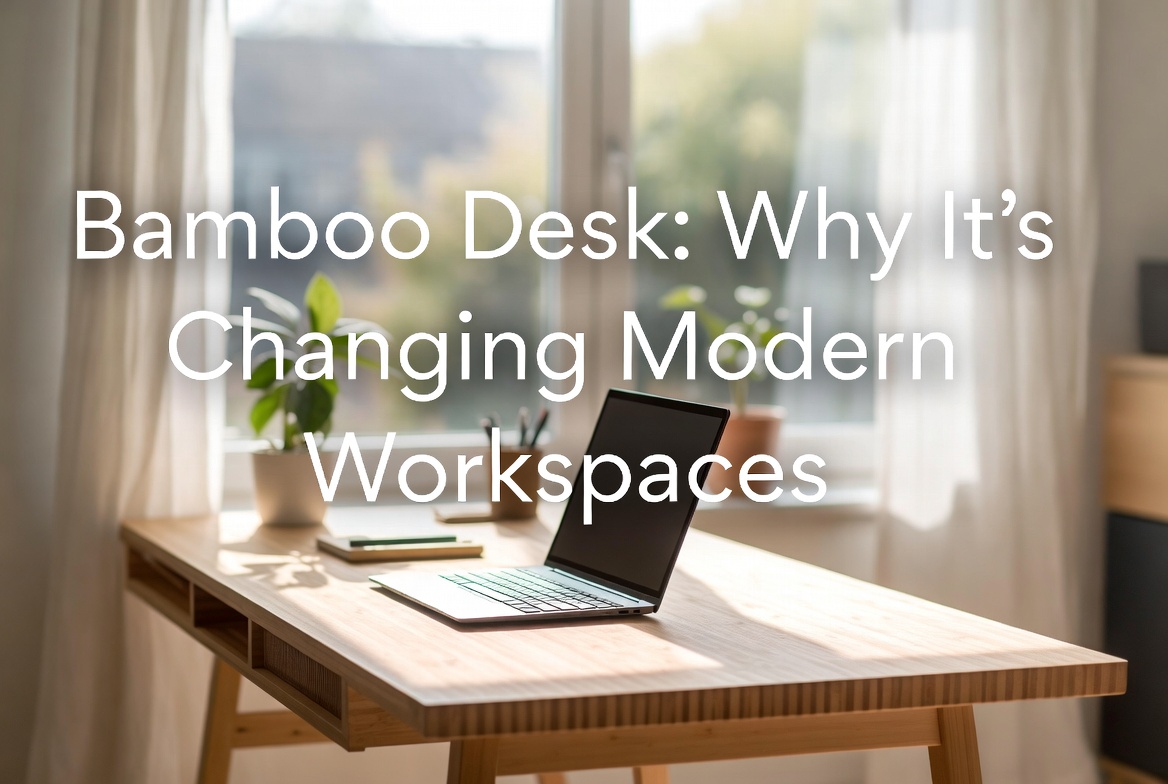
Amid the wave of pursuing sustainable development, a type of office furniture inspired by nature is quietly emerging—bamboo desks. Compared to traditional wooden office desks, bamboo is reshaping the face of modern office spaces with its unique material advantages and eco-friendly characteristics.
Material Advantages: Nature’s Gift of Office Quality
Bamboo is one of the fastest-growing plants on Earth; some varieties can grow nearly 1 meter per day and mature in 3-5 years. Compared to hardwood, which requires a growth cycle of 20-50 years, bamboo’s resource utilization rate is nearly tenfold. During production, bamboo furniture has a carbon footprint 62% lower than solid wood furniture, making it a “low-carbon pillar” in the office sector.
Professional testing shows that high-density bamboo can achieve compressive strength of 80MPa, 1.5 times that of oak; its flexural strength exceeds 120MPa, far surpassing common woods like pine. Bamboo treated under high temperature and high pressure rivals rosewood in hardness, effectively resisting daily scratches in office settings.
Modern bamboo is treated with carbonization and lamination processes, with moisture content stably controlled between 8%-12%. Experimental data show that the dry shrinkage and wet expansion rate of treated bamboo is only 0.3%, far below the 2%-5% range of solid wood, effectively solving the cracking and deformation problem of traditional wooden furniture. Special anti-moth technology also protects bamboo from pests, with a service life of over 15 years.
The “bambooquinone” substance contained in bamboo fiber has been tested by the Chinese Academy of Sciences and confirmed to have an inhibition rate of over 90% against E. coli and Staphylococcus aureus, naturally forming a hygiene barrier. After oxidation treatment, the desk surface improves antibacterial performance by 37%, making it especially suitable for modern offices that prioritize health.
vs. Solid Wood
1.5x That of Oak
Rate
with Anti-Moth Tech
Industry Insights: New Infrastructure for Green Offices
The global green office furniture market is growing at an annual rate of 11.2%, with the bamboo furniture segment growing as high as 23.8%. Behind this explosive growth is the deepening of corporate ESG strategies: 68% of Fortune 500 companies have incorporated sustainable procurement into their assessment systems, and bamboo has become the preferred choice due to its traceable supply chain.
This structure increases the impact resistance of desktops by 40% while reducing material loss to 8%, far below the industry average of 15% for wooden furniture.
It is worth noting that the International Bamboo and Rattan Organization (INBAR) certification system has become the industry gold standard. This certification requires bamboo materials to come from well-managed bamboo forests and to have a wastewater recovery rate of over 90% during processing. Currently, 37 enterprises in bamboo industry bases such as Anji and Fujian have obtained this certification, with export premiums of up to 30%.
Consumer Guide: The Way to Choose with a Discerning Eye
Prioritize products with FSC (Forest Stewardship Council) or PEFC (Forest Certification System) labels to ensure sustainable bamboo sourcing.
High-quality bamboo tables should have a uniform light honey color, smooth grain, and no glue marks. The edge of the desktop must have edge banding strips of at least 2mm, which is a key process for moisture and crack prevention.
Tapping the table should produce a crisp sound, indicating the bamboo density meets the standard. Drawer slides need to bear more than 45kg, which is a practical method for assessing the strength of frame structures.
Pay attention to new curved bamboo technology; these steam softening desktops achieve a minimum bending radius of R50mm, meeting the design needs of creative office spaces.
A bamboo office desk is not just a piece of furniture, but a carrier of sustainable office concepts. The next time you choose a desk, don’t hesitate to touch the gentle bamboo grain—nourished by sunlight and rain, the culmination of artisanal wisdom, and a green commitment to the future office ecosystem. In the long, bamboo-yun office space, every typing on the keyboard is helping lighten the burden on the planet—perhaps the most visionary choice in the modern workplace.
Post time: Jun-02-2026