
Search “japandi bathroom” and you’ll get hundreds of photographs: pale oak vanities, microcement walls, a hinoki stool beside a freestanding tub. Beautiful, and almost useless — they show what a finished Japandi bathroom looks like, not why yours keeps coming out like a hotel lobby or a furniture showroom.
The reason is almost always the same: too many materials, and no limit on objects. Japandi isn’t a palette you buy — it’s a budget of visual noise, and most people overspend it in the first three purchases. Here’s the rule that holds the look together, plus the honest part most guides skip: where bamboo actually belongs in it, and where it doesn’t.
First, What Japandi Actually Is
Japandi joins two traditions that shouldn’t get along. From Japan: wabi-sabi — beauty in imperfection, in visible grain, in objects that record their own use. From Scandinavia: hygge — warmth, softness, the room you actually want to sit in at 7 a.m. in February.
Japanese minimalism alone runs cold and ceremonial; Scandinavian warmth alone runs cluttered. Japandi is the specific compromise: warm restraint — fewer things, softer light, materials that age instead of wearing out. That’s why a glossy white cabinet and a chrome tap kill the look instantly: not because they’re cheap, but because nothing about them can age.
The 5-Material Rule
Pick five materials for the whole room. Not five per wall — five, total. Everything you add after that must be one of the five, or it doesn’t go in.
| Material | Share of the room | Job it does |
|---|---|---|
| Wood (oak, ash, bamboo) | 30% | Warmth and grain — the thing that stops the room reading as clinical |
| Stone or plaster (limestone, travertine, microcement) | 30% | Quiet mass; seamless walls mean no grout lines to scrub |
| Ceramic | 15% | Handmade texture — the wabi-sabi signal |
| Linen / natural textile | 15% | Softens hard surfaces, absorbs sound |
| Metal (aged brass, matte black) | 10% | The only permitted shine, and only where hands go |
The 2026 shift worth knowing: chrome is out, and aged or unlacquered brass has replaced matte black as the default accent. Brass darkens in the recesses and stays bright on raised surfaces — wabi-sabi applied to metal. Matte black still works, as accent rather than rule.
Where Bamboo Earns Its Place
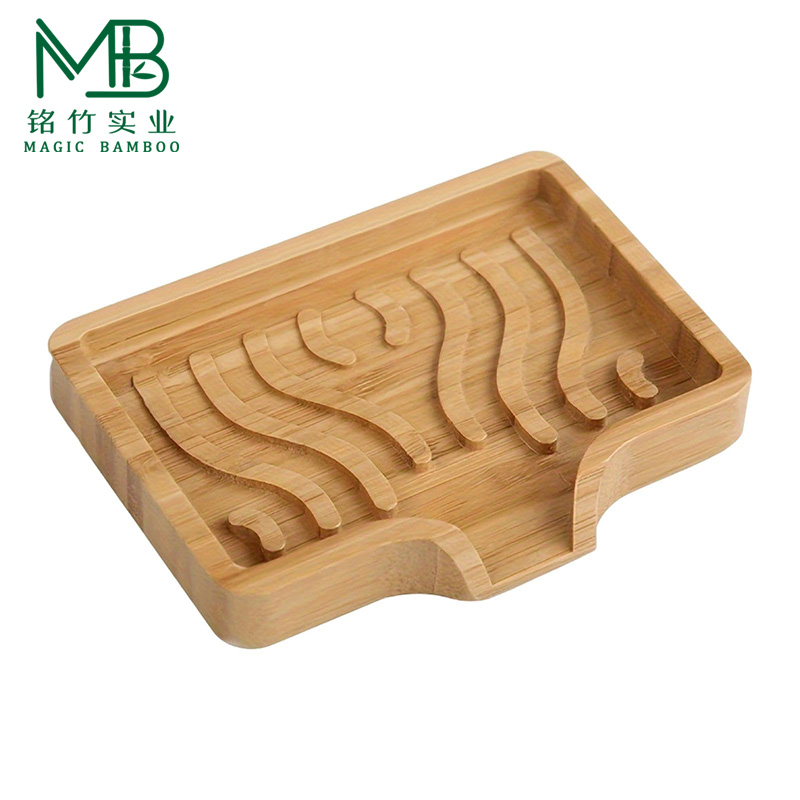
The honest version: bamboo is a grass, not a wood — it reaches harvest maturity in 3–5 years instead of 30–50, which is why it’s the affordable route to the warm grain Japandi wants (full material comparison here). A solid bamboo bathroom accessories set — tray, dispenser, tumbler, soap dish, toothbrush holder — delivers the wood-and-ceramic pairing above for a fraction of a stone-vanity budget.
Three things to know before you buy:
- Solid laminated bamboo ≠ bamboo-fiber composite. The first is strips of bamboo pressed and bonded; the second is fiber mixed with plastic resin that behaves — and yellows — like plastic. Ask which one you’re getting. (More in our bamboo facts guide.)
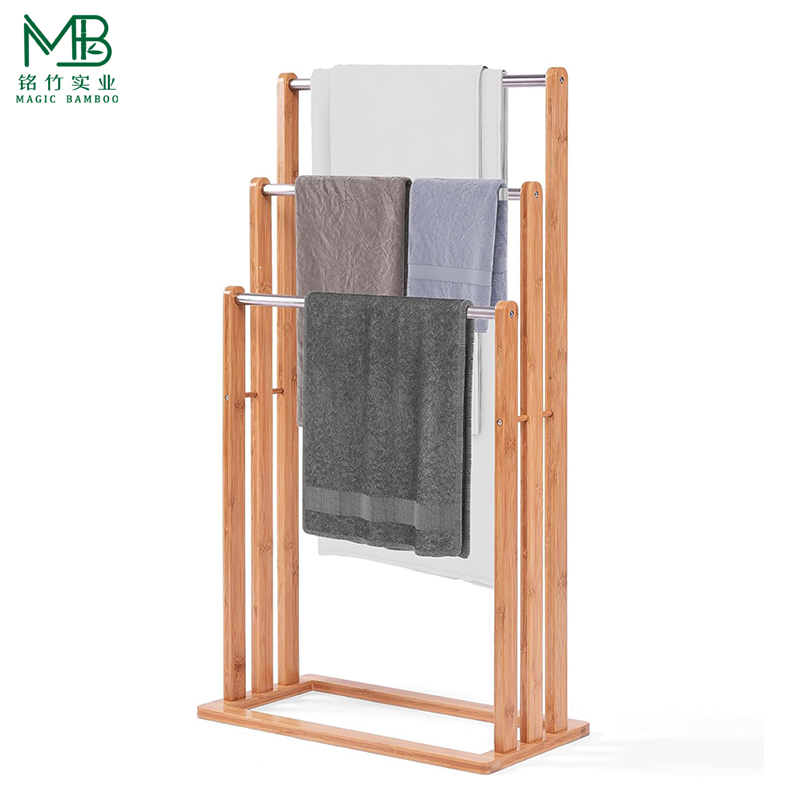
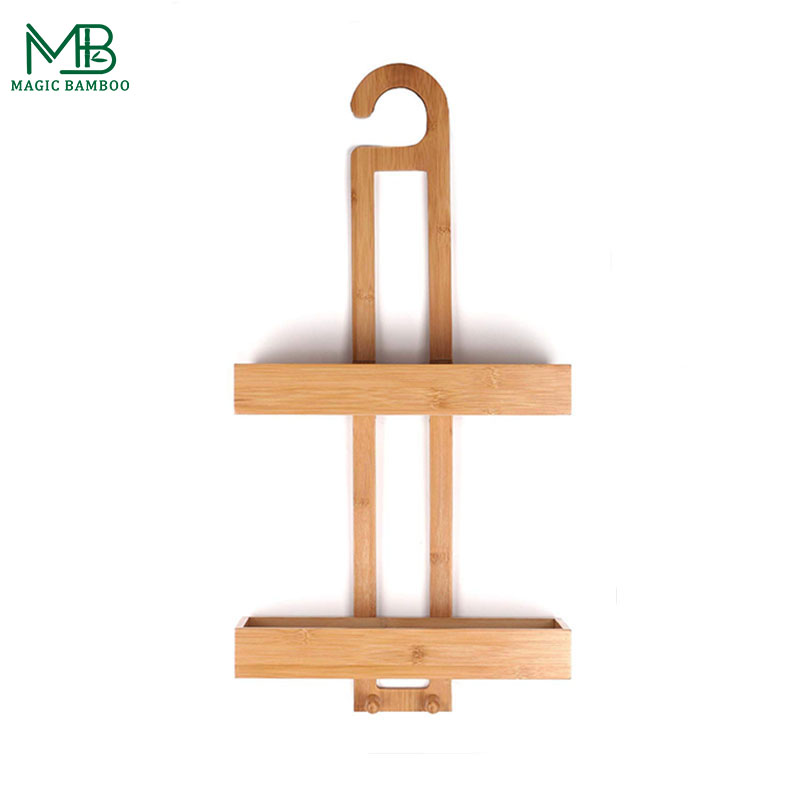
- Bamboo belongs on the accessory layer, not the hero layer. A bamboo tray, mat, shelf or laundry hamper: yes. A bamboo vanity as the room’s centerpiece: risky, because a bathroom is the worst room in the house for any material that can’t dry out.
- It needs air, not vigilance. Slatted designs, a weekly wipe-down, nothing sitting in standing water. Our bamboo care guide covers the routine in five rules.
The 3-Object Counter Rule
Count what’s on your vanity right now. Japandi allows three. Not three categories — three objects.
The test for each one: is it functional, beautiful, or both? If neither, it’s clutter with a good story. A soap dispenser, a folded linen hand towel, one small plant. That’s the counter. Everything else lives in a closed drawer or a lidded basket — open shelves are for the three things you chose to display, not the twelve you couldn’t decide between.
What Quietly Breaks the Look
- Matching sets. A five-piece set in identical finish reads as a purchase, not a room. Break it with one ceramic piece.
- Cool grey. “Greige” is warm; builder grey is blue-tinged and turns every wood tone yellow against it.
- Plant collections. One healthy plant beats six struggling ones — the most common Japandi failure.
- Bright overhead light. One ceiling fixture erases every texture you paid for. Layer warm 2700 K light low and indirect.
Spend Here, Save There
| Spend on | Save on |
|---|---|
| Anything you touch daily — tap, dispenser, towel rail | Accessories and trays (solid bamboo is genuinely good here) |
| The wall finish (plaster or microcement: no grout to fail) | Open shelving — go closed, it hides more and costs less |
Frequently Asked Questions
What are the best colors for a Japandi bathroom?
Warm off-white, soft oat, and greige as the base — warm, never blue-tinged. Then one deep accent: charcoal, walnut, or blackened steel. Six pigments is plenty; the restraint is the style.
Can bamboo furniture work in a Japandi bathroom?
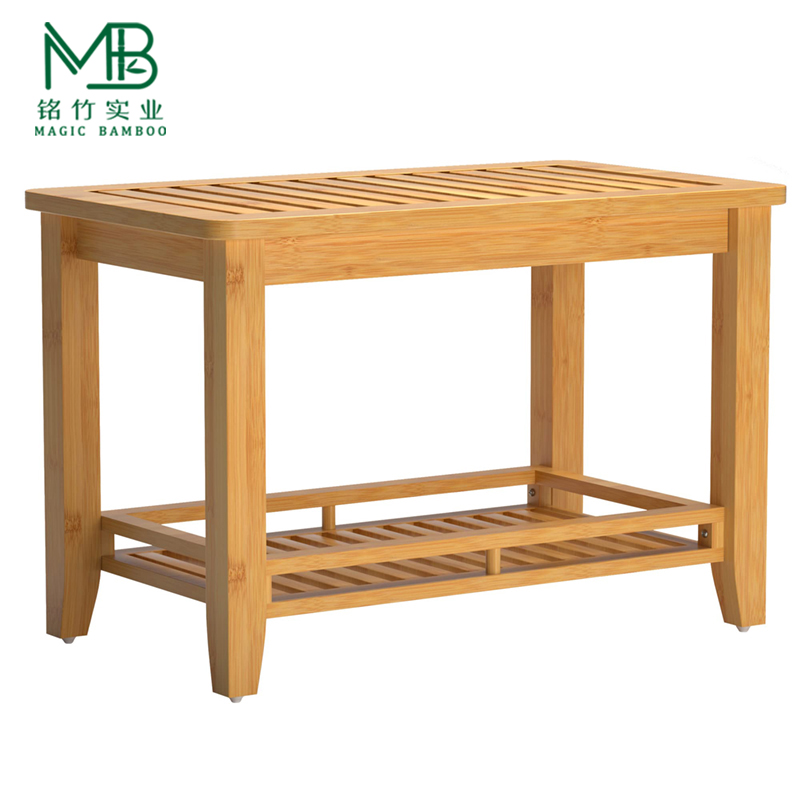
Yes, on the accessory layer — trays, mats, shelves, laundry hampers, stools. It gives you the warm grain of oak at a lower price and handles humidity better than most woods. Keep it out of standing water and let it dry between uses.
Is Japandi the same as Scandinavian or Japanese minimalism?
No. It’s the overlap: Japanese wabi-sabi (imperfection, visible grain, ritual) plus Scandinavian hygge (warmth, softness, liveability). Pure Japanese minimalism is colder and more formal; pure Scandi is brighter and busier.
How do I get a Japandi bathroom on a budget?
Change three things: swap the hardware to aged brass or matte black, replace matching plastic accessories with solid bamboo ones, and take everything off the counter except three objects. No demolition required.
Next step
Building the look: explore our bamboo bathroom collection for the accessory layer, the 5-piece accessories set for the counter, and a multilayer bamboo plant stand for the one plant the room is allowed. Retailers: our OEM/ODM program builds Japandi-friendly assortments in solid bamboo — samples in 7–10 days.
Post time: Nov-12-2026